Cytogenomics
Introduction to Cytogenetics
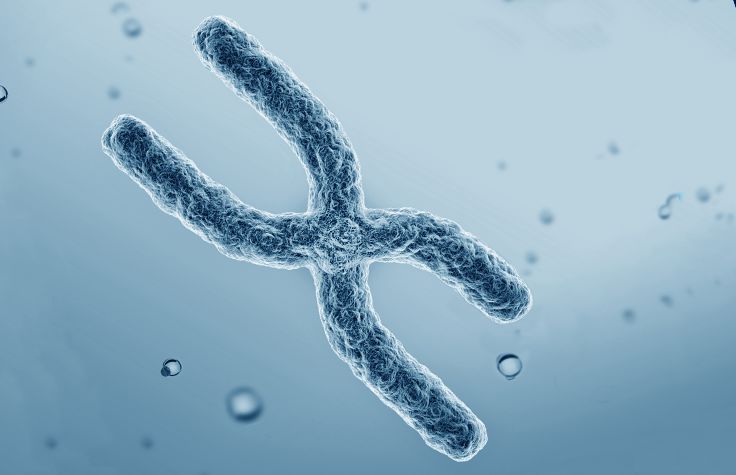
Understanding chromosome aberrations through cytogenetic analysis is an integral part of current genomic medicine, playing a role in research into both constitutional disorders and cancer.
Chromosomal abnormalities, including aneuploidies, deletions, duplications, and rearrangements, may result in misregulation of gene expression or generation of novel proteins.
At Illumina, we collaborate with industry experts, thought leaders, and customers to develop solutions to meet your evolving research needs.
Arrays and sequencing
Cytogenomic microarrays offer a simple, reliable method for assessing chromosomal aberrations and their biological relevance at a higher resolution. Next-generation sequencing (NGS) also offers detection capabilities that complement arrays by providing researchers with a genome-wide view of chromosomal variation.
Illumina offers high-quality microarrays and high-throughput array scanners designed to detect chromosome aberrations and provide accurate, reliable cytogenomic data. The iScan System features rapid scan times, exceptional data quality, automation options to reduce hands-on time, and support for a variety of applications.
View iScan SystemAnalyzing and interpreting your microarray data can be a time-intensive manual process. To help labs address this, Illumina offers Emedgene software—a comprehensive research software designed by geneticists to streamline interpretation workflows and reduce the variant curation burden.
Emedgene software is powered by explainable AI (XAI) and automation for high-throughput, user-defined variant interpretation workflows. Emedgene enables:
- Visualization at the variant, chromosome, and genome-wide level
- Automated accessioning/reporting
- The ability to leverage curated and historical data

Illumina cytogenetics solutions
In this brochure, learn about the importance of cytogenetic analysis and technologies to detect chromosomal abnormalities. Explore workflows with Illumina arrays, analysis software solutions, and hardware tailored for your needs.
Download brochureFeatured Cytogenomics Research Stories

Exploring variants of unknown significance with cytogenetic microarrays
Dr. Benjamin Darbro discusses his research using a wide range of cytogenetic tools, including microarrays, DNA sequencing, FISH, and bioinformatic analysis to explore gene networks involved in neurodevelopmental disorders.

Validation and performance of the Infinium Global Diversity Array with Cytogenetics
In this webinar, Dr. Benjamin Darbro, associate professor at the University of Iowa Carver College of Medicine, discusses how the Infinium Global Diversity Array with Cytogenetics (GDA+Cyto) excels at the detection of CNVs and ROHs relevant for clinical research testing.

Cytogenetic Testing Offers Insights into Recurrent Pregnancy Loss
Trilochan Sahoo, MD discusses the benefits of the CytoSNP-850K BeadChip for cytogenetics researchers.
Why Cytogeneticists Are Using NGS with FISH
NGS can save time and money while enabling you to meet best practices for analyzing samples with unknown abnormalities.
View Infographic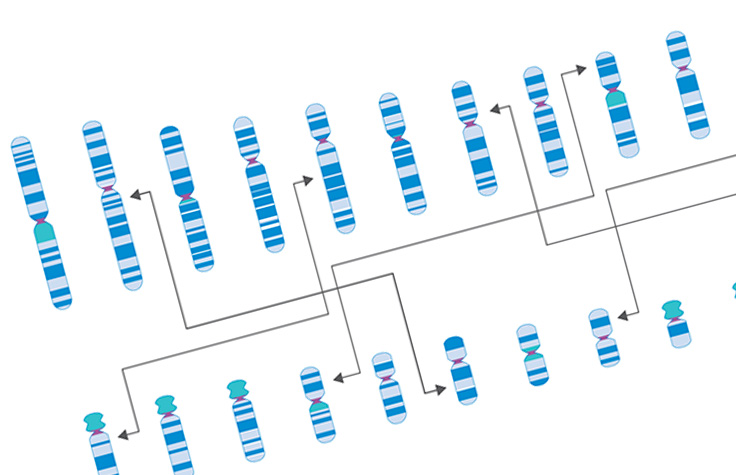
Genomic Technologies for Cytogenetics
| Parameter | FISH | Karyotyping | Arrays | NGS (large gene panel) |
NGS (whole genome) |
|---|---|---|---|---|---|
| Whole-Genome View | No | Yes | Yes | No | Yes |
| Resolution | > 50 kb | > 5 Mb | < 1 kb | 1 base pair | 1 base pair |
| Aneuploidy | Yes | Yes | Yes | Yes | Yes |
| Unbalanced Translocation | Yes, if known | Yes, if large | Yes | Yesa | Yes |
| Balanced Translocation or Inversion | Yes, if known | Yes | No | No | Yes |
| Mosaicism | Yes | Yes | Yes, if 20% of cells present | Yes | Yes |
| Polyploidy | Yes (indirect) | Yes | Yes (SNP arrays only) | Yes | Yes |
| UPD | No | No | Yes (SNP arrays only) | Yesb | Yes |
| Copy-Neutral LOH | No | No | Yes (SNP arrays only) | No | Yes |
| SNVs | No | No | No | Yes | Yes |
| Gene Fusions | Yes | No | Yes, if unbalanced No, if balanced |
Yes | Yes |
Using arrays and NGS to complement traditional methods, cytogeneticists can obtain a comprehensive view of genetic abnormalities, both large and small.2
- Yes, if branch points are targeted.
- Yes, if both parents are analyzed.
Cytogenomics workflow
Select array
Infinium Global Diversity Array with Cytogenetics-8
Profile clinical research variants associated with congenital disease, cancer research, pharmacogenomics (PGx), and exome content with this microarray.
Infinium Global Screening Array with Cytogenetics-24
Detect structural variation in the human genome and examine cytogenomic changes in constitutional diseases and cancers with this research microarray.
Process and scan arrays
iScan System
The iScan microarray scanner supports high-throughput BeadChip processing, scanning hundreds to thousands of samples quickly and accurately.
Infinium Automation Option Packages
Automation options with robot control software for Infinium assays streamline sample preparation workflows and reduce errors.
Analyze
DRAGEN Array
DRAGEN Array provides accurate, comprehensive and efficient secondary analysis for Infinium microarrays.
Emedgene software
Emedgene variant interpretation software streamlines your tertiary analysis workflows for rare disease genomics and other germline research applications.
Microarray Kits and Software for Cytogenomics
- Infinium CytoSNP-850K v1.4 BeadChip: This array provides comprehensive coverage of cytogenetically relevant genes for congenital disorders and cancer research.
- BlueFuse Multi Software: This intuitive software analyzes array-based molecular cytogenetic and in vitro fertilization (IVF) data as well as NGS-based IVF data. It offers a clear user interface and scales for the needs of your lab.
Interested in receiving newsletters, case studies, and information on genomic analysis techniques? Enter your email address.
Additional Resources
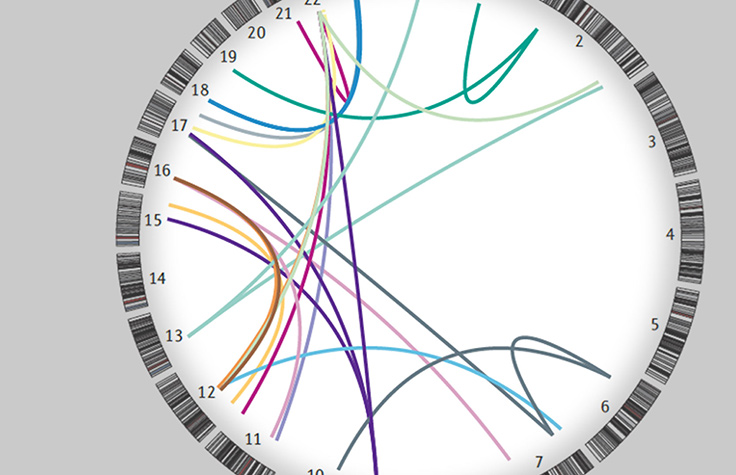
Novel Fusions and Pharmacogenomic Targets in Cancer
Learn about the optimization and validation of commercially available clinical NGS assays.

Chromosomal Genetics Studies with Arrays and NGS
Laboratory adopts the newest technologies to analyze chromosomal abnormalities and their connection to disease.
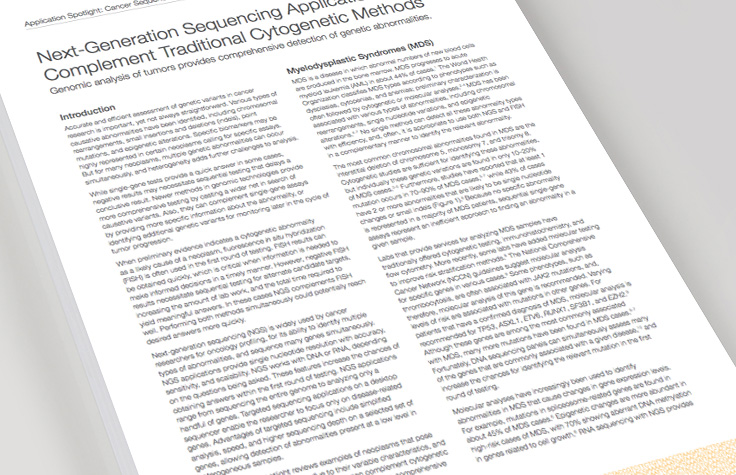
NGS Complements Traditional Cytogenetic Methods
Genomic analysis of tumors provides comprehensive detection of genetic abnormalities.
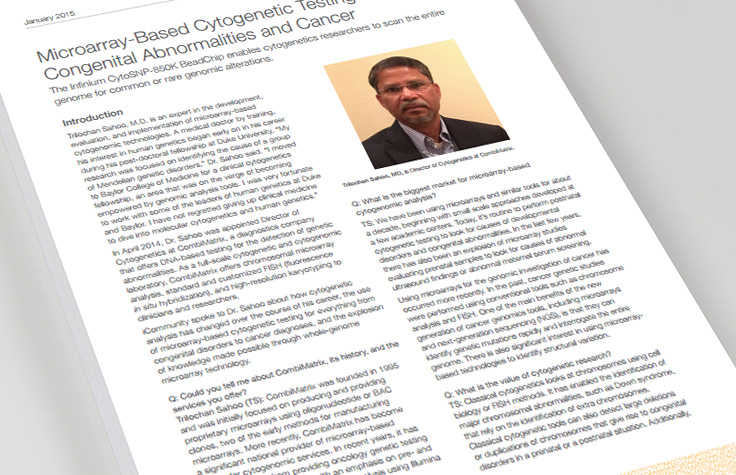
Cytogenetics Expert Interview
Trilochan Sahoo, MD discusses the benefits of the CytoSNP-850K BeadChip for cytogenetics researchers.
One System for NGS and Arrays
Perform sequencing and high-quality cytogenomic array scanning, all on the NextSeq 550 System.
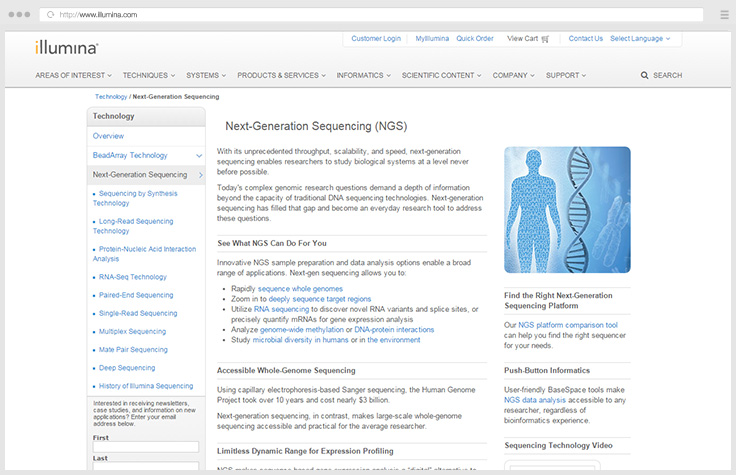
Transform Your Research with NGS
Find out more about how NGS technology works and what it can do for you.
References
- PROFOUND. Molecular Cytogenetics (FISH, Fluorescent In Situ Hybridization, Array-Based). Rep. no. 271067. N.p.: Global Industry Analysts, 2016. Print.
- Halder A, Jain M. Cytogenetics to cytogenomics: transition from chromosome to DNA sequence. Global Journal of Human Genetics & Gene Therapy 2014;2:53-67.