Featured Cancer Researchers
See what cancer researchers have to say
Find out what cancer researchers are discovering with Illumina technology.
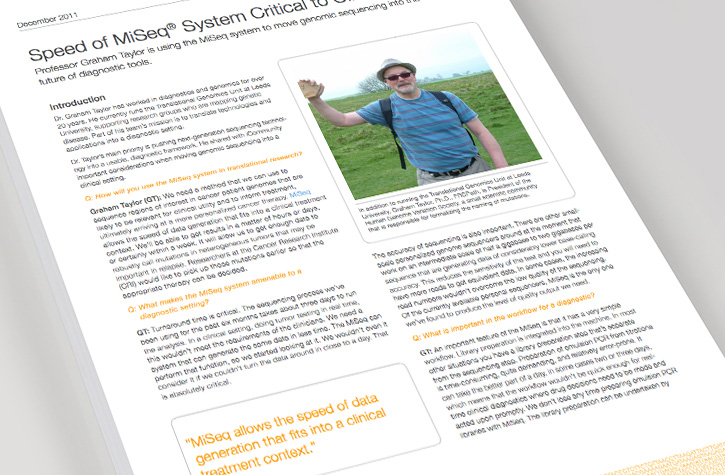
Graham Taylor, Ph.D. FRCPath
Translational Genomics Unit, Leeds University
President of the Human Genome Variation Society
Access PDFRegarding cancer patient genome sequencing translational research: “MiSeq allows the speed of data generation that fits into a clinical treatment context.”
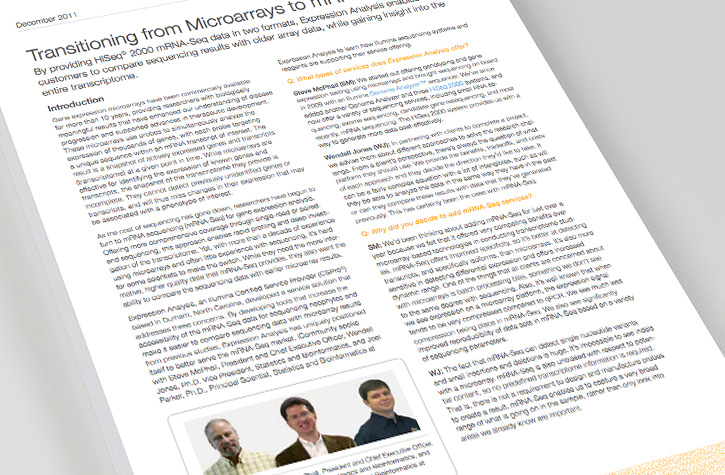
Steve McPhail
President and Chief Executive Officer, Expression Analysis
Access PDFRegarding a study to inform clients about the benefits of RNA-Seq for transcriptome analysis of breast cancer cells: “We felt the data would be persuasive in showing how mRNA-Seq could provide additional information about the biology of what they were studying.”
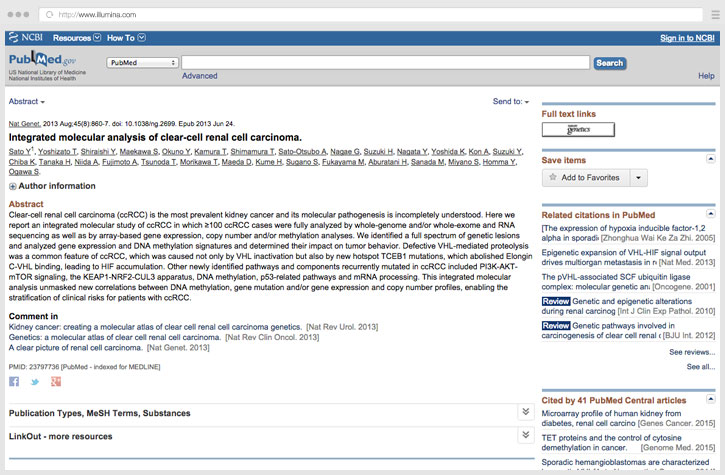
Seishi Ogawa, Ph.D.
University of Tokyo
Read Paper“Cancer is caused by genetic mutations. To fully understand their functional consequences, it is essential to view the complete spectrum of genetic alterations both at the DNA and RNA level, as well as copy number and methylation changes. Our research aims to understand the genetic basis of various human cancers using revolutionized sequencing technologies.”
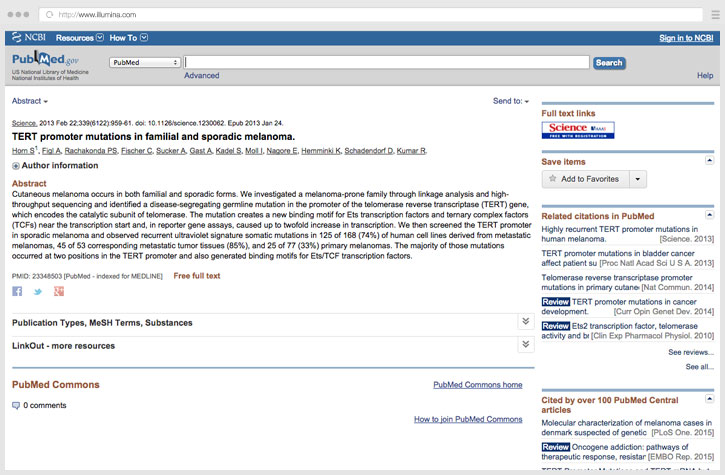
Susanne Horn, Ph.D.
Postdoctoral Researcher
Division of Molecular Genetic Epidemiology
German Cancer Research Center
Read Paper“Following targeted enrichment, we used the HiSeq 2000 to perform next-generation sequencing of familial melanoma samples, identifying a promoter mutation of the TERT gene. We then identified similar mutations in somatic melanoma, providing a novel genetic insight into key mutations in melanoma.”
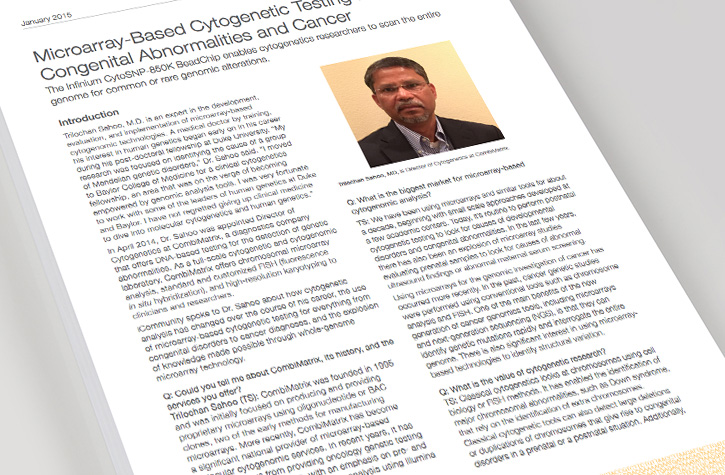
Trilochan Sahoo, MD
Director of Cytogenetics, CombiMatrix
Access PDF“Now that we have whole-genome tools such as microarrays and NGS, we can analyze the entire genome from a few malignant cells at a resolution that allows us to identify abnormalities and look for rearrangements with a very high degree of precision.”