December 2, 2025
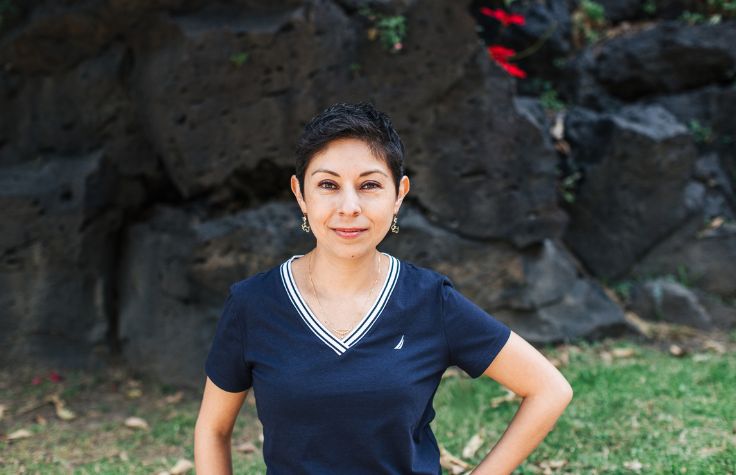
Just 15 days after she celebrated her wedding, Sandra Pérez’s life changed completely. Doctors diagnosed her with cancer—and if left untreated, they said, she’d have only two months to live.
In her hometown of Mexico City, Sandra grew up healthy, surrounded by a tight-knit community of friends and family. After working as a lab technician, she joined Illumina as a sales manager for Mexico. Throughout her life, Sandra loved being an athlete. She played sports, enjoyed running, and was always active—until, in fall 2023, she noticed it was becoming more difficult to breathe. Around the same time, painful ulcers began appearing in the back of her throat every month. Sandra took a blood test through a private lab that sent her the results directly, and she immediately knew something was wrong.
“As a chemist, I know a little about the interpretation of these blood tests,” says Sandra, who holds a master’s degree in biotechnology. “When I saw it, I thought, ‘Oh my gosh, this is not good.’” Her red blood cell count was dangerously low. A hematologist prescribed her vitamin B12 and folic acid to promote blood cell growth, but when her condition did not improve, doctors admitted her to the Centro Médico Nacional Siglo XXI hospital in Mexico City.
On January 4, 2024, she received her diagnosis: acute myeloid leukemia (AML), a rare blood cancer that accounts for just 1% of new cancer cases. The cancer cells made up 40% of her bone marrow—Sandra needed to begin chemotherapy immediately.
Discovering treatment options with genomics
Overwhelmed by the life-altering news, Sandra consulted her personal network of experts—connections she’s cultivated throughout her career in health sciences. She decided that biomarker testing was the next step. With their help, she received a next-generation-sequencing (NGS) panel for AML. The results revealed a mutation in the GATA2 gene and an ETV6:MECOM fusion—variations that indicate a poor prognosis and a high likelihood of relapse.
According to Sandra, AML patients usually begin treatment with four to five rounds of chemotherapy. If they relapse—and 50% do—they receive additional courses. But her panel results opened a door to another option: a bone marrow transplant, a treatment often reserved for patients with a high risk of relapse.
“So, because of genetic testing, I had the privilege to be considered in the transplant protocol since the beginning,” she says.
She then began the arduous task of finding a bone marrow donor. Family members on her mother’s side took a human leukocyte antigen (HLA) compatibility test—but no match was found. Sandra grew up without her father and had no connection to paternal relatives, making it difficult to locate more potential donors.
Eventually, she found some uncles and cousins who shared shocking news: Sandra had a sister, Valeria. Her family took to the internet to search for her and eventually found a clue: Valeria’s graduate thesis, posted on a university website. Sandra contacted the university thesis director, who agreed to introduce the half siblings by phone.
“It was really, really hard,” Sandra recalls. “It was stressful for her and for us. Because how do you say this to somebody? I am your sister, and maybe you didn’t know about my existence, but I’m here and I need you.”
Valeria agreed to take the HLA compatibility test. She was a match—and she chose to donate.
After completing the initial four rounds of chemotherapy required, Sandra successfully received the bone marrow transplant a few months later, in October 2024. She has been on the road to recovery ever since.

Genetic testing accessibility changes lives
Had she not sought genetic testing on her own, Sandra would have undergone four to five cycles of chemotherapy, followed by low-dose treatment for two years. If she relapsed—which was highly likely due to the genetic mutations identified in the NGS panel—her chances of recovery would have decreased even with additional chemotherapy. Instead, she began chemotherapy and the transplant protocol simultaneously thanks to genetic testing.
Less than two years after her diagnosis, she is now in remission and managing her transplant care with prophylactic medication. Along with regular medical checkups and working with a nutritionist to maintain a healthy lifestyle, she’s getting back to doing what she loves.
“I’m feeling really, really good,” she says. “Since I left the hospital, I started exercising. I’m working out at home; I run and I do some weightlifting.”
Sandra knows she was uniquely fortunate. Her scientific background and professional network gave her access to the NGS panel that changed everything. Where she lives in Mexico—and in many parts of the world—biomarker testing is not widely available. “I was able to get my genetic testing, not because it’s covered by my public insurance, but because of the network I have,” she says. Those who can afford private hospital care are more likely to access it, but it remains extremely expensive.
Sandra wants people to know that genomic access is life-changing. Genomic insights allow doctors to tailor treatment plans based on individual risk—moving away from one-size-fits-all approaches.
“I feel that people, doctors in general, need to know more about genomics,” she says, “because at least in Mexico, we don’t have really easy access to it.”
Companies like Illumina are working to expand access to genomic testing and make it more affordable, while educating clinicians and patients about the benefits of NGS. Technological advancements and increased awareness have made genomic education an integral part of health care for many oncology patients.

Finding light in the dark
Nearly two years ago, Sandra received the devastating news of her AML diagnosis. She also received an unexpected gift: the discovery of a sister she never knew existed.
“And it was really hard for Valeria, but she’s the bravest woman I know now,” Sandra says. “Because she took this responsibility in her hands, and she accepted to be my donor.” That connection became a beacon of hope in one of the darkest chapters of her life.
Today, Sandra reflects on her journey. She credits her recovery to a lifelong commitment to staying healthy, the unwavering support of her family, friends, and Illumina colleagues—and the power of genomic testing.
Now back at work, Sandra feels more driven than ever to expand NGS across Latin America. By sharing her story, she hopes to inspire others to advocate for genomic testing, ask questions, and take charge of their treatment journey.
Sandra is sharing her story as a testimonial of the potential benefits of biomarker testing enabled through next-generation sequencing. One person’s experience is not predictive of results in other biomarker testing cases, which may differ based on a variety of factors. Results in other cases may vary.