July 14, 2025
Simone Lehwess Mozzilli wants a world where children diagnosed with cancer feel empowered.
Mozzilli didn’t plan to become a patient advocate. She studied communications in college and ran a digital content agency whose clients included Apple, BlackBerry, and Sony. But in 2008, while volunteering with Disney VoluntEARS, her path changed. Mozzilli began visiting children with cancer and helping their families arrange for housing while traveling for treatment. “The kids are smart; they talk to each other,” she says. “I started to realize that kids know everything about what they’re going through. They start to tell me about chemotherapy and going to the hospital.”
In 2010 and 2011, Mozzilli was monitored for an ovarian cyst. Though it appeared benign, she sought care at A.C.Camargo Cancer Center in São Paulo, where she’d been volunteering. One of the children there, seven-year-old Ana Luiza, knew her from her volunteer work. She urged Mozzilli to get the cyst removed. Mozzilli’s doctor—and five others—said surgery wasn’t necessary. But after Ana Luiza passed away that June from pediatric cancer, Mozzilli insisted. It was only then that surgeons discovered she had metastatic ovarian cancer with just a 20% chance of survival.
“Ana Luiza saved my life,” she says.
Mozzilli spent six months in treatment, undergoing major surgery—removing five organs and 51 lymph nodes—and rounds of chemotherapy. Through it all, the same children she once comforted were now the ones supporting her.
That’s when the idea came for her nonprofit. “It started inside the hospital—during my treatment, during the kids’ treatment,” she says. She and the kids began drawing medical illustrations and developing content to help other children understand various medical procedures. Many patients came from regions in Brazil with low health literacy, and they needed information in clear, honest, and accessible language.
Now in its 11th year, Beaba (which Mozzilli describes as “the ABCs of Cancer”) is a nonprofit that provides educational tools to help kids with cancer understand their illness, communicate with doctors, and fight stigma—especially in countries like Brazil. The organization’s signature resource, the Beabook, includes over 190 illustrated definitions of terms children might encounter during treatment—including those relevant to genomics, such as “gene,” “genetics,” and “cell therapy.” It’s currently available in more than 300 hospitals worldwide. Beaba has also developed material for NF-1 (a genetic condition that causes nerve tissue tumors and spotting on the skin) that uses the metaphor of an animal who has spots. In addition to educational content, Beaba hosts camps and other support programs for kids undergoing cancer treatment and their caretakers.
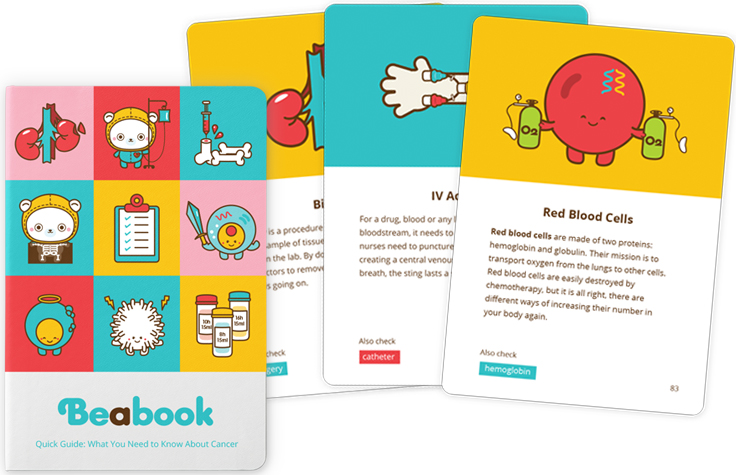
In 2024, Illumina partnered with Beaba to translate the Beabook into Braille. The material was created by Nicole Santos—a child who became blind from retinoblastoma—and her mother, Bianca Chaloh. It’s the first Braille resource in the world dedicated to pediatric oncology; it was presented at the International Society of Paediatric Oncology Congress in 2023. Illumina also supported the development of a website with materials in English and Spanish. These new additions expand access to Beaba’s patient- and family-friendly information about cancer and its treatment, including the importance of biomarker testing, in a clear, objective, and optimistic manner.
Beaba’s impact is challenging to measure, Mozzilli says, especially since requests for their materials come from countries as far afield as Japan and Ukraine. She also knows that the information they share on social media (available shortly after on their website) is further shared in more private forums, like group chats.
“My dream is to have materials for all diseases, because diseases will not disappear,” Mozzilli says. Most medical information is difficult to understand, but Beaba is showing how powerful it can be to communicate it with humor and honesty. ◆