NGS Library Preparation
Experience Faster Library Prep
Easy adoption with superior support across the entire workflow. Fast, simple library prep and enrichment workflow from Illumina.
- DNA
- RNA
- Enrichment
- Amplicon
- Epigenetics

The foundation to discovery and insights. Quality, precision, and ease of use in every step with our library prep portfolio advancements.
Get more out of your samples, reduce hands-on time, and save money. Benefit from the best customer support using the entire Illumina workflow.
See What’s Possible for Your Experiments*
1ng
1hr
~3hr
*Specifications for Illumina DNA Prep. This is just one example; see chart below for specifications on other time-saving library prep kits.
Do More with Illumina Library Prep
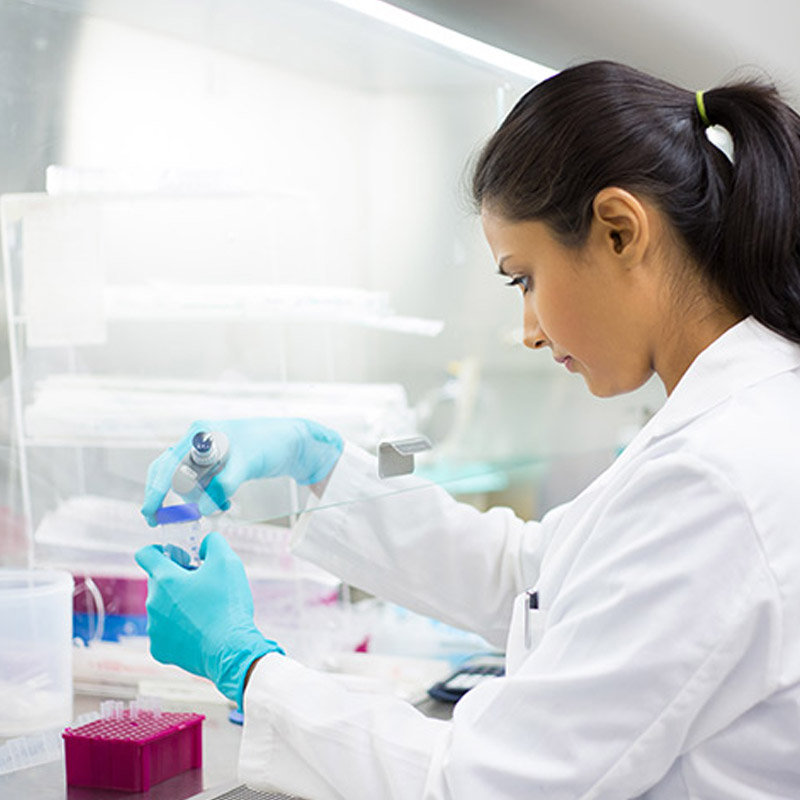
NGS library preparation with continual innovation. The result: a workflow that is even easier to use, scalable for any size lab, requires a small number of steps, and has a fast workflow time. The library preparation process involves converting a genomic DNA sample (or cDNA sample) into a library of fragments which can then be sequenced on an NGS instrument. Breakthrough technology in our library prep helps you get to answers in less time.
Breadth of NGS Library Prep Lets You Ask Virtually Any Question
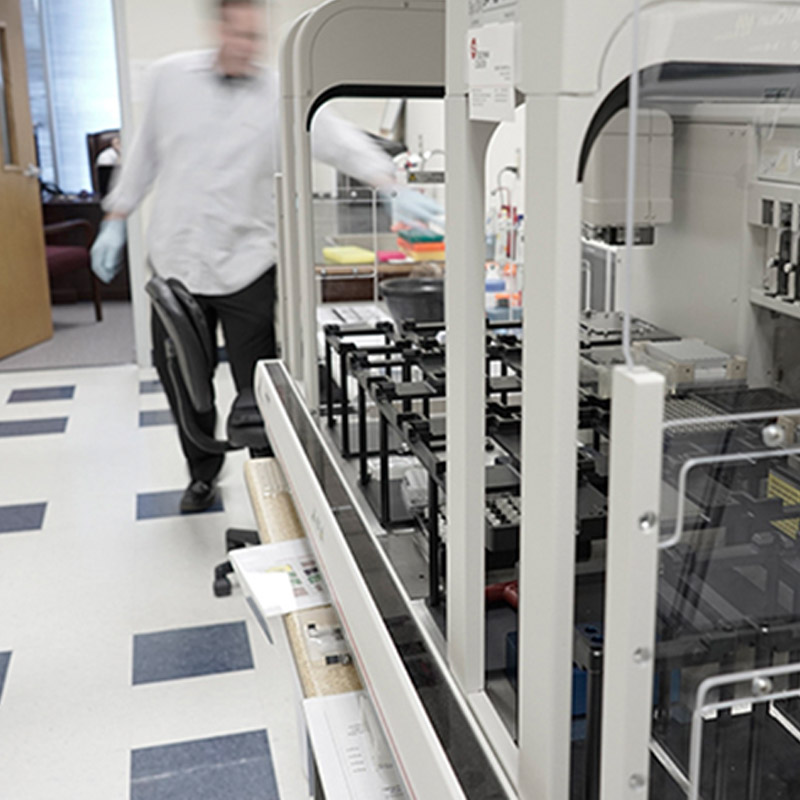
Illumina library prep protocols accommodate a range of throughput needs, from lower-throughput protocols for small labs to fully automated library preparation workstations for large laboratories or genome centers. Our solutions support a broad range of sample types, from cell lines to fresh tissue, formalin-fixed paraffin-embedded (FFPE) samples, blood, and other challenging sample types.
Illumina Library Prep: Designed for a Perfect Fit
Not only do our library preparation solutions save you time and money, they are optimized specifically for our instruments and secondary analysis platform, DRAGEN. Even those new to NGS will find the workflows and applications are easy to adopt. In addition, you’ll experience superior support across the entire workflow because our customer support team will have more information to help you troubleshoot your sequencing runs.
Fast, simple library prep from Illumina
Illumina DNA library prep kits and RNA library prep kits enable rapid generation of high quality samples and sequencing data. Optimized for Illumina sequencing platforms, each kit provides highly reproducible results across sample types and experiments—even from the most challenging samples. Watch the video and discover the ease of adoption with superior support across the entire workflow.
Watch now
Related Solutions
Automation
Our partners have developed both high- and low-throughput walk-away automation methods that span our library prep portfolio.
Learn MoreIndex Adapters
Increase the number of samples sequenced per run and optimize high-throughput sequencing using unique dual index adapters.
Learn MoreUMIs
Unique molecular identifiers (UMIs) provide error correction and accuracy. They can reduce false-positive variant calls while increasing variant detection sensitivity.
Learn More
NGS Workflow Finder
Take the guesswork out of your next workflow. The NGS Workflow Finder provides personalized solution recommendations and resources so you can sequence with confidence.
Find your NGS workflow todayAt-a-Glance
| Application | Whole-genome sequencing | Whole-genome sequencing | DNA enrichment - no UMI |
|---|---|---|---|
| Hands-on time | ~45 min | 1-1.5 hrs | ~2 hrs |
| Turnaround time | ~1.5 hrs | ~3-4 hrs | ~6.5 hrs |
| Input | 25 ng to 300 ng | 1 ng to 500 ng | 10 ng to 1000 ng |
| Automation available | Yes | Yes | Yes |
| PCR protocol | No | Yes | Yes |
| Library Quant needed? | No | No | No |
| Fragmentation included? | Yes – on bead | Yes – on bead | Yes – on bead |
| Product | Illumina DNA PCR-Free Prep | Illumina DNA Prep | Illumina DNA Prep with Enrichment |

| Application | Whole transcriptome | mRNA | RNA enrichment |
|---|---|---|---|
| Hands-on time | < 3 hrs | < 3 hrs | < 2 hrs |
| Turnaround time | ~7 hrs | 6.5 hrs | < 9 hrs |
| Input | 1 to 1000 ng standard quality RNA; 10 ng for optimal performance and FFPE samples | 25 to 1000 ng standard quality RNA | 10 ng standard quality RNA; 20 ng RNA for low quality / degraded / FFPE |
| Automation capability | Liquid handling robots | Liquid handling robots | Liquid handling robots |
| PCR protocol | No | No | Yes |
| Library Quant needed? | Yes | Yes | Yes |
| Fragmentation included? | Yes | Yes | Not required |
| Product | Illumina Stranded Total RNA Prep | Illumina Stranded mRNA Prep | Illumina RNA Prep with Enrichment |
Ask an expert how you can get the most with Illumina Library Prep
We'll walk through your needs and make recommendations.
Key NGS Library Preparation Technologies
Our innovative NGS library preparation portfolio uses three key technologies. Find out the benefits of each approach and how they differ.
Bead-Linked Transposome Tagmentation
This technology uses bead-bound transposomes for a more uniform reaction compared to in-solution tagmentation reactions.
Adapter Ligation
The ligation process prepares NGS libraries by fragmenting a genomic DNA or cDNA sample and ligating specialized adapters to both fragment ends.
Amplicon Library Prep
With a PCR-based workflow and ease of use for users new to NGS, amplicon library prep can measure thousands of targets simultaneously.
Library Prep Technical Tips
DNA/RNA Isolation Considerations
Find guidance to help you avoid contamination while purifying DNA/RNA before library preparation.
dsDNA Library Concentration
Learn how to convert library concentration from ng/µl to nM for some Illumina library preparation methods.
Quantification and Quality Control
Find out how to quantify and validate final libraries for a successful sequencing run.
Library QC with the MiSeq i100 Series
Assess quality and optimize library pooling before sequencing on high-thoughput systems.
Library Normalization Best Practices
Learn when library normalization is required, and how to perform the necessary steps.
What is the PhiX Control v3 Library?
Learn how to use the PhiX library as a control in your Illumina sequencing runs.