Copy Number Variation (CNV) Analysis
Introduction to CNV analysis
Copy number variations (CNVs) are genomic alterations that result in an abnormal number of copies of one or more genes. Structural genomic rearrangements such as duplications, deletions, translocations, and inversions can cause CNVs.
Like single-nucleotide polymorphisms (SNPs), certain CNVs have been associated with susceptibility to diseases such as cancer, autoimmune diseases, inherited genetic disorders, and more. Illumina offers a variety of microarray and next-generation sequencing (NGS) solutions for high-resolution copy number analysis.
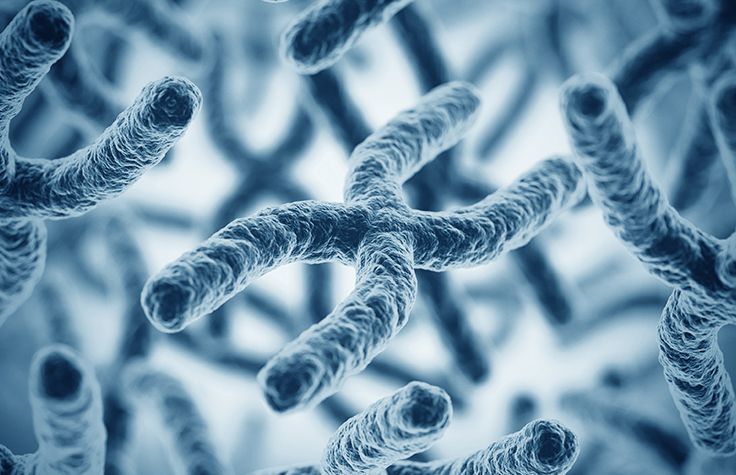
Microarray-based CNV analysis
Genome-wide genotyping arrays are commonly used to detect genetic variants, including CNVs that contribute to diseases and phenotypes. Array-based approaches for copy number analysis offer reliable, efficient methods for large-scale analysis.
Researchers can process multiple samples on a single microarray for broad surveys of genomic structural variation, and accurately profile chromosomal aberrations such as amplifications, deletions, rearrangements, and copy-neutral loss of heterozygosity.
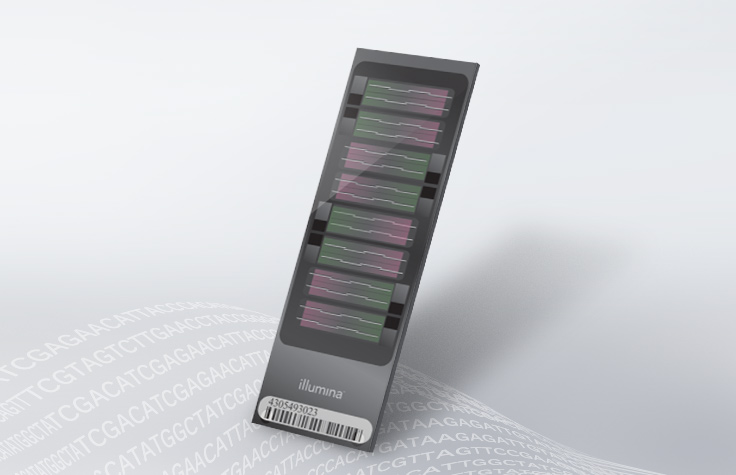
Featured CNV array solutions
Illumina offers a broad range of microarrays for identifying copy number aberrations. Our scientists strategically select the markers on the arrays to provide maximum genome coverage for optimal copy number analysis.
Cytogenomic arrays
Arrays for cytogenetics research that are specifically validated for CNV analysis as part of the manufacturing process.
Human genotyping
Unbiased, non-targeted arrays for human variant detection, providing high coverage across the human genome.
Custom genotyping
Design custom or semi-custom arrays for any species, with convenient online tools and Illumina expert assistance.
All microarray kits
Find ready-to-use microarrays for a wide variety of genotyping and epigenetics studies.
NGS-based copy number analysis
While efficient for large CNV detection, genotyping arrays are less sensitive for detecting CNVs smaller than 50 kilobases. By providing a base-by-base view of the genome, NGS detects small or novel copy number variants that arrays often miss.
NGS can also map the exact location of a CNV. The high resolution of sequencing complements the high throughput of arrays, enabling a comprehensive view of the genome.
Featured NGS solutions for CNV analysis
Whole-genome sequencing
Get a high-resolution, base-by-base view of the entire genome and identify potential causative disease variants.
Whole-exome sequencing
Investigate protein-coding regions of the genome to uncover genetic influences on disease and population health.
DRAGEN secondary analysis
Perform accurate, ultrarapid analysis of sequencing data, including CNV analysis for insights into genomic structural variation.
Emedgene software
Streamline variant interpretation for rare disease and germline research applications. Analyze various variant types, from CNVs to single nucleotide variants, mitochondrial DNA variants, and more.
Unmasking autoimmune diseases using genomics
Researchers initially used genome-wide arrays to identify copy number variations associated with lupus. To gain further insights, they adopted NGS-based whole-genome and whole-exome sequencing to interrogate large numbers of genes for rare mutations.
Read interview
Studying downstream effects of CNVs
Copy number variation often alters gene expression. RNA sequencing (RNA-Seq) is an unbiased approach for analyzing and quantifying transcripts of interest. RNA-Seq can capture subtle gene expression changes, measure allele-specific expression, and detect fusion genes. By characterizing the downstream effects of variants, researchers can better understand the molecular mechanisms of disease.
NGS shows CNV impact on gene expression
Researchers use targeted RNA-Seq to uncover how a CNV linked to schizophrenia affects gene expression in the brain.
CNV data analysis articles
Small- and medium-length CNV detection with WGS
This technical spotlight demonstrates how researchers achieved high-sensitivity detection of small-length CNVs (1-10 kb) and medium-length CNVs (10-50 kb) by combining Illumina whole-genome sequencing with algorithms built into DRAGEN secondary analysis.
Read articleAccurate CYP2D6 genotyping using WGS data
Compared with traditional genotyping assays, whole-genome sequencing provides a promising option for building accurate allele frequency databases for pharmacogenomics research applications because it assays CNVs as well as other variants.
Read articleRelated content
Cytogenomics
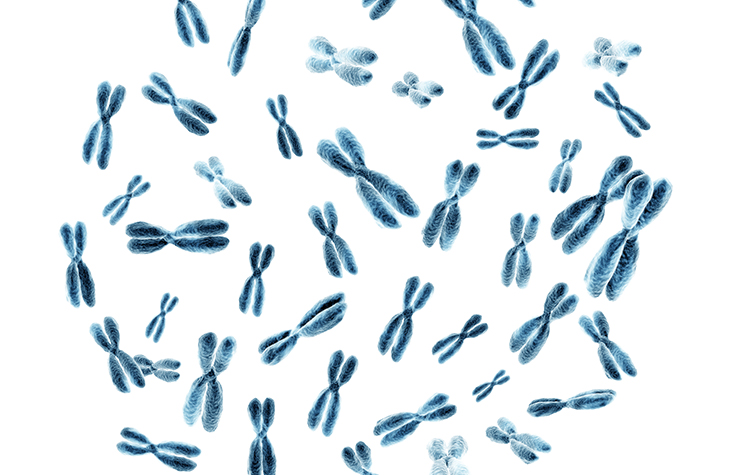
Illumina offers microarrays designed to detect chromosome aberrations and provide accurate cytogenomic data. NGS may be used to confirm copy number variants detected by arrays. Learn more about cytogenomics.
Rare disease genomics
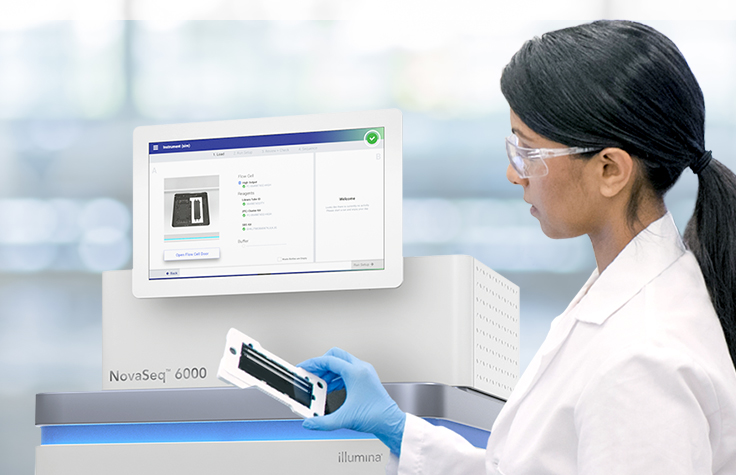
NGS technology is helping to drive breakthroughs in rare disease studies by facilitating identification of disease-associated genetic variants. Learn more about rare disease genomics.
Complex disease research

Array and NGS solutions can help researchers identify causative variants, including CNVs, associated with complex diseases. Learn more about complex disease genomics.
Karyomapping

This technique creates a map of embryo chromosomes, giving researchers valuable insight into the role that genomics plays in the inheritance of single-gene defects. Learn more about karyomapping.
Interested in receiving newsletters, case studies, and information on sequencing methods? Enter your email address.
Additional resources
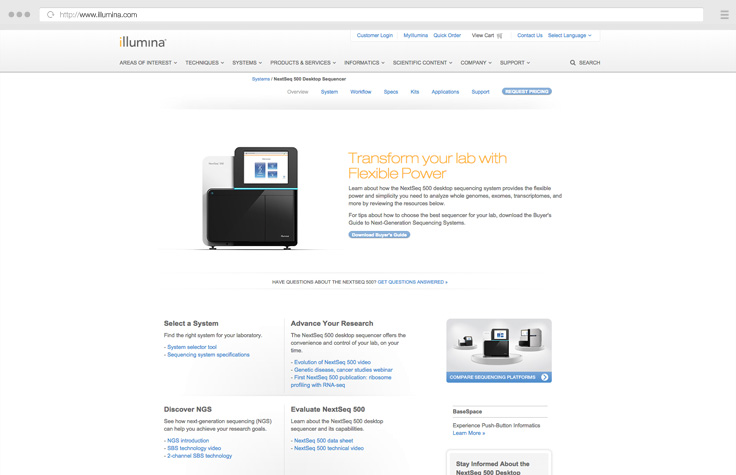
System for NGS and cytogenomic arrays
Perform sequencing and high-quality cytogenomic array scanning all on a single platform, the NextSeq 550 System.
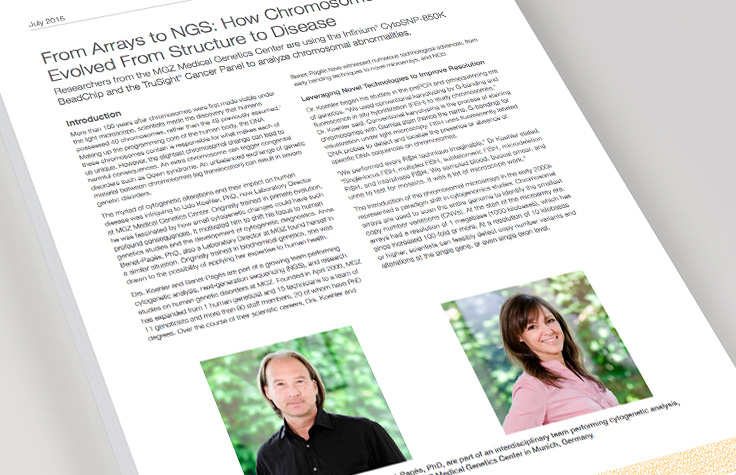
Chromosomal genetics studies
Researchers adopt NGS and array technologies to analyze chromosomal abnormalities and their connection to disease.
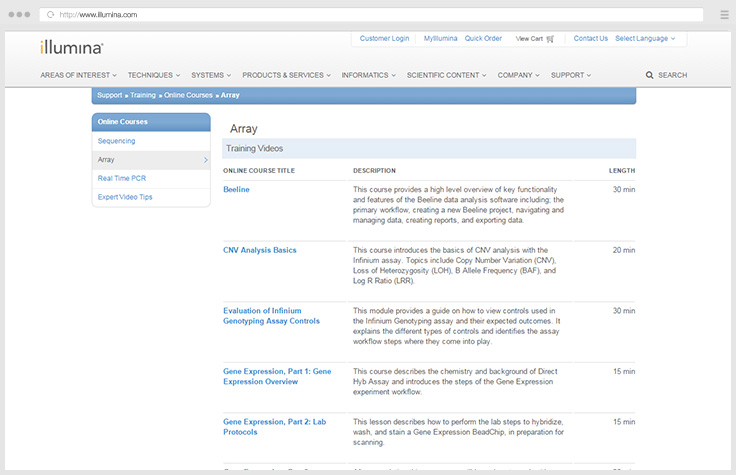
CNV array data analysis training
Learn how to analyze CNV data from Infinium genotyping arrays using GenomeStudio Software.